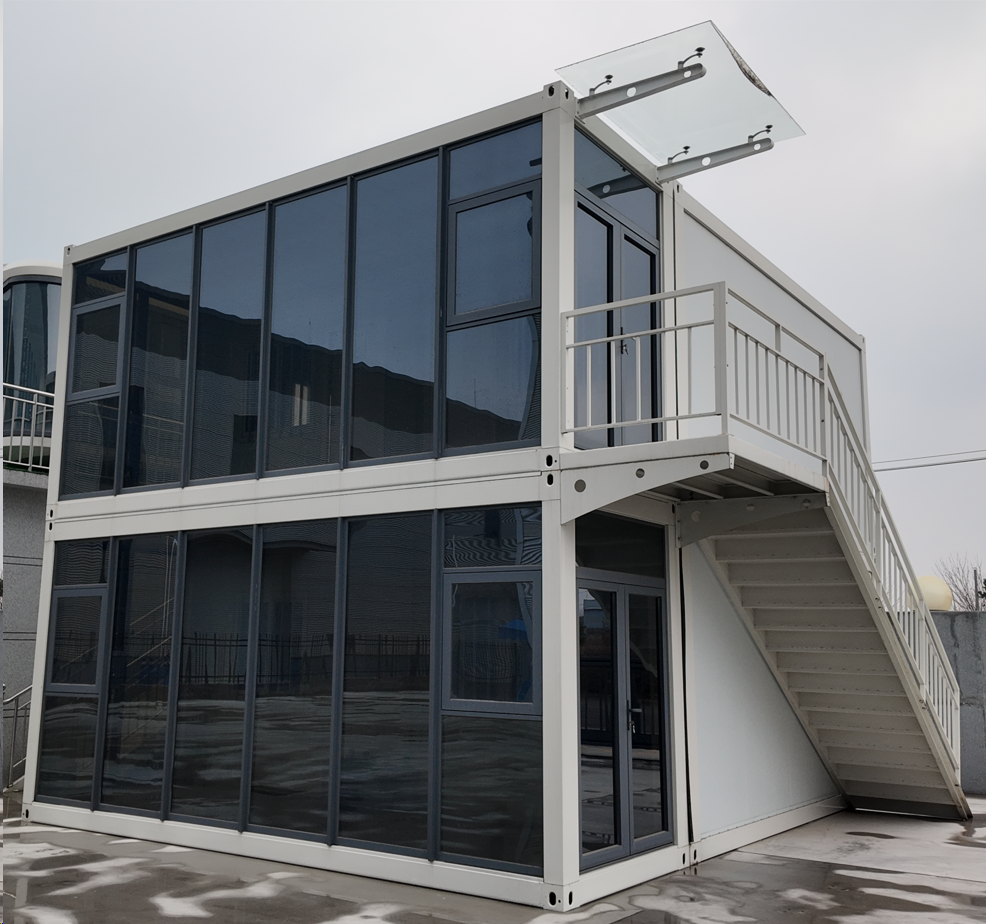
From highway projects in remote mountainous areas to subway construction in urban core areas, this "smart house" is redefining temporary space solutions for construction sites with its flexible and environmentally friendly characteristics.
1、 The 'Deformation Record' of Folding Packaging Box House on Construction Site: Innovation from Structure to Function
Traditional construction sites often use brick concrete or color steel plate structures for temporary buildings, which have problems such as long construction periods, high pollution, and difficulty in reuse. The folding packing box room solves these pain points through modular design. Its core structure consists of a high-strength steel frame and environmentally friendly panels (such as rock wool board and polyurethane board). The frame is connected by bolts, and the panels are fixed by buckles without the need for welding or concrete pouring. This design gives the container room the ability to "fold": during transportation, the box can be compressed to one-third of its original height, and a truck can load 6-8 standard boxes; When in use, it can be unfolded into a complete house within 10 minutes through hydraulic devices or manual operation.
More noteworthy is its functional scalability. By splicing and combining, a single box room can be extended into a double decker dormitory, conference room, or even a temporary hospital. For example, in high-altitude construction projects, installing an oxygen supply system and insulation layer inside the container room can adapt to extreme environments; In coastal areas, anti-corrosion coatings and typhoon resistant designs ensure safety. The feature of "one bedroom, multiple uses" makes the folding and packing box house a "puzzle" for construction sites.
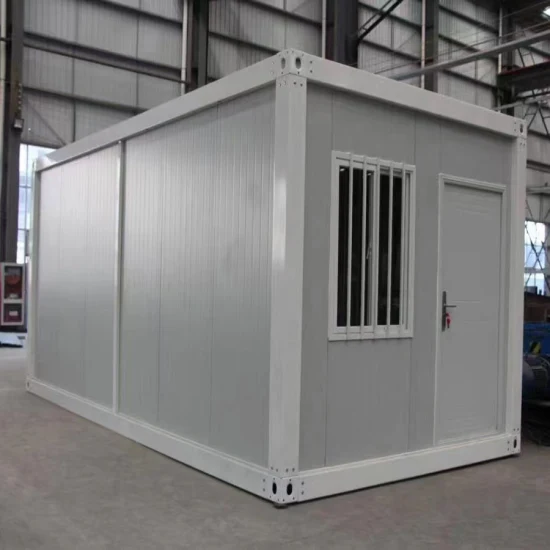
2、 Three major advantages: why has it become the "new favorite" of construction sites?
1. Win win between environmental protection and economy. Traditional temporary buildings will generate a large amount of construction waste after demolition, while folding and packing box houses can be reused for more than 10 years with a material recycling rate of over 90%. Taking a 100 person construction site as an example, using traditional color steel plate houses costs 150000 yuan, while the initial cost of folding box houses is 20% higher, but multiple turnover within 5 years can save 40% of the cost. In addition, the box house is prefabricated in the factory, and there is no dust or noise pollution on site, which meets the requirements of green construction.
2. Rapid deployment and flexibility In emergency rescue scenarios, time is life. The "ready to use" feature of the foldable packing box room makes it a useful tool for post disaster reconstruction. For example, after the rainstorm in Henan in 2021, a rescue team built 200 temporary dormitories in just three days to provide shelter for the victims. For commercial projects with tight construction schedules, container houses can be flexibly relocated according to the construction progress, avoiding the waste of resources caused by "building and demolishing".
3. The demand for temporary buildings in modern construction sites is no longer limited to providing shelter from wind and rain. The folding packing box room can integrate IoT technology, monitor temperature and humidity, air quality in real time through sensors, and even link with the fire protection system. Some projects also attempt to install solar panels in the container room to achieve energy self-sufficiency. This "smart" transformation upgrades temporary buildings from "functional containers" to "smart spaces".